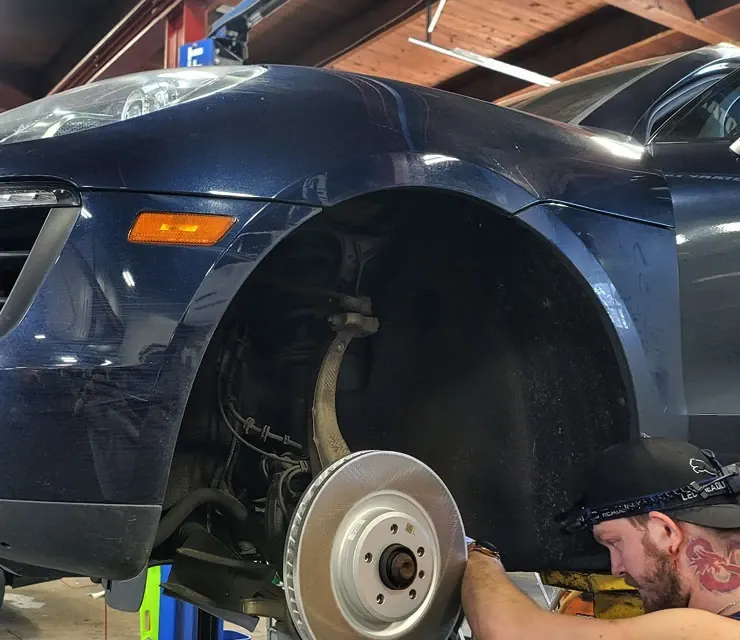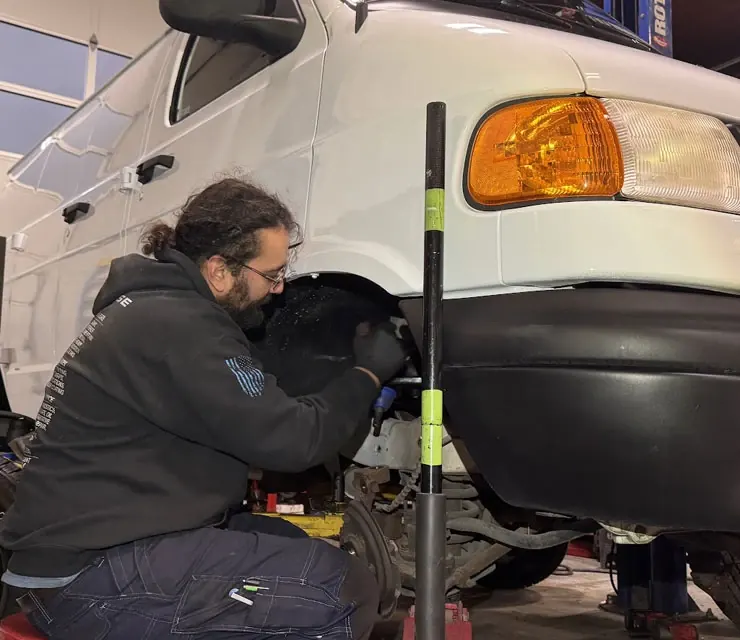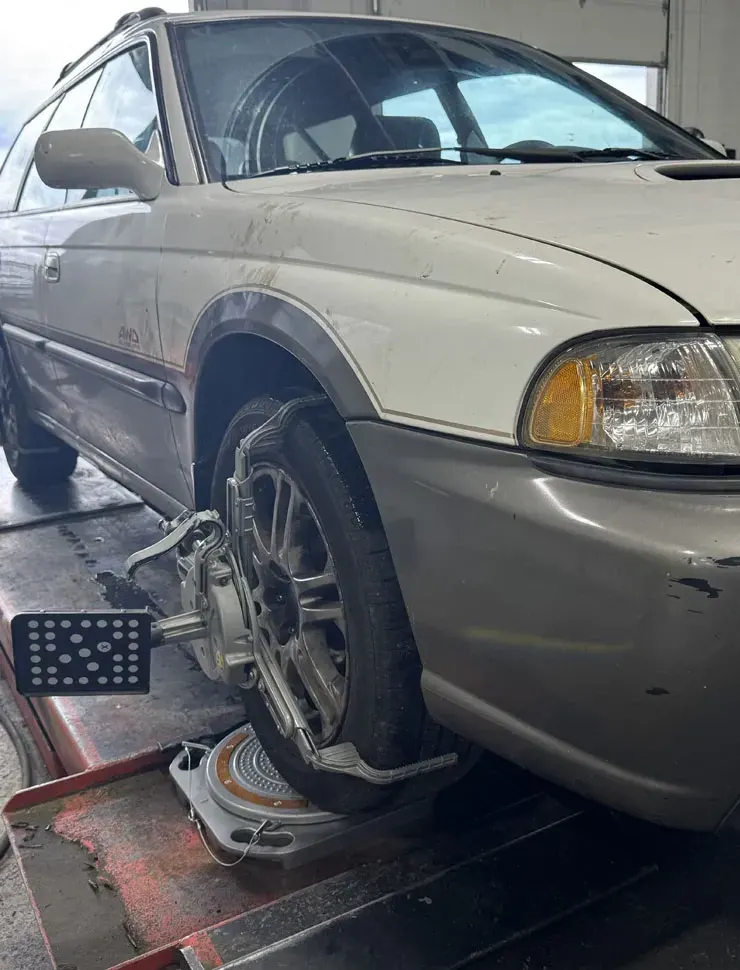
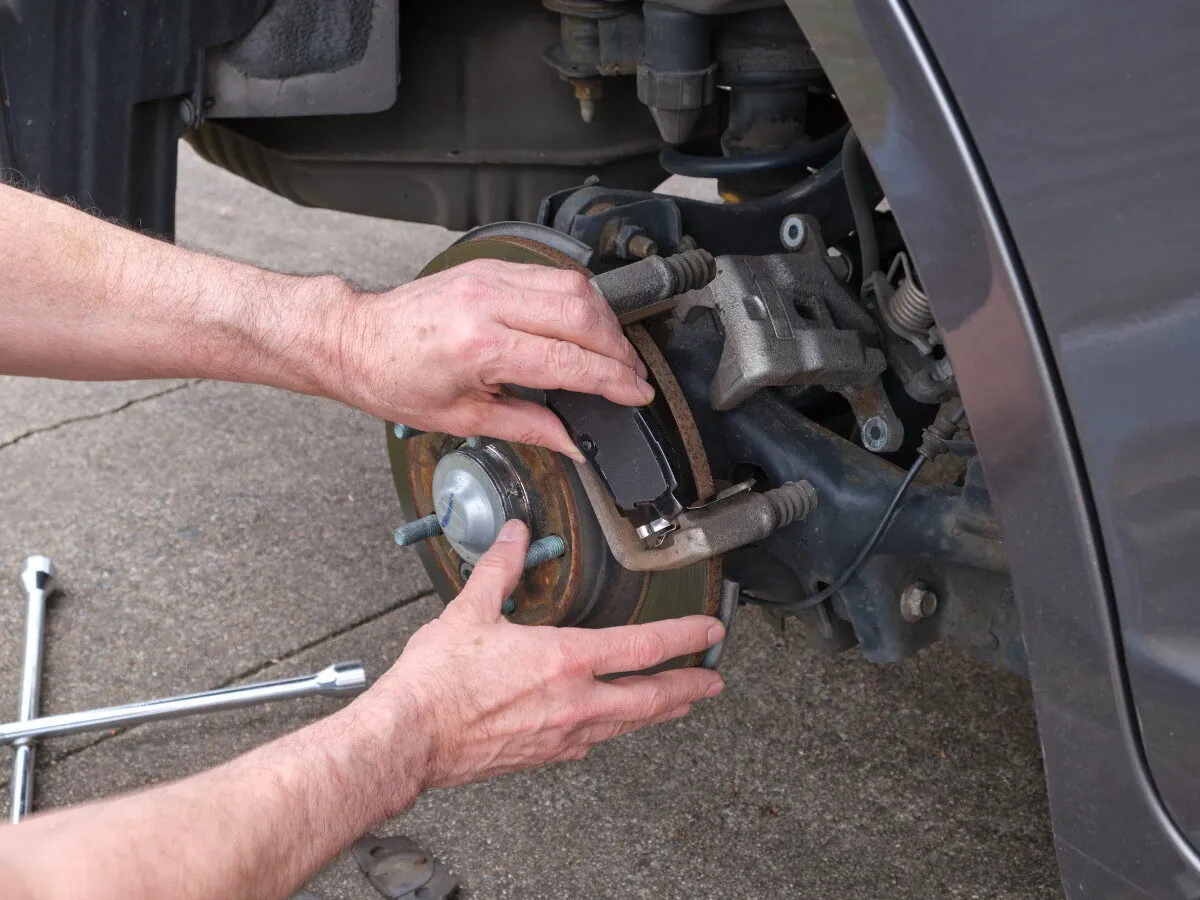
The price of a brake job depends mainly on how much of the system needs replacing (pads only, pads and rotors, or calipers and hoses as well), the grade of parts chosen, the vehicle itself, and the labor time the job takes on that model. Whether it covers one axle or both, and extras such as a fluid flush or new hardware, add the rest. Two drivers asking for "a brake job" can mean very different amounts of work.
This page explains each factor so you can read a quote line by line. It deliberately gives no dollar figures, because parts prices and labor rates shift too much between vehicles and from year to year to be useful.
The factors that set the price
| Factor | Why it changes the bill |
|---|---|
| Scope of work | pads alone are the smallest job; rotors, calipers, hoses or a master cylinder each add parts and time |
| One axle or two | front and rear are usually priced separately, and fronts tend to wear first |
| Parts grade | economy, mid-grade, premium and original-equipment parts differ in price, noise, dust and life |
| Vehicle type | heavy trucks, performance models and some European cars use larger or specialty parts |
| Labor time | some designs come apart in minutes, others need extra steps or special tools |
| Electronic parking brake | many newer cars need a scan tool to retract the rear calipers |
| Condition of hardware | seized bolts, rusted slides or a stuck caliper add time |
| Add-ons | fluid flush, new clips and shims, wear sensors, rotor machining |
The single biggest swing usually comes from timing. Pads replaced at the first squeal are a short job. Pads run until they grind can take the rotors with them, and a caliper that has been dragging for months may need replacing too.
How your vehicle affects the quote
A compact sedan and a three-quarter-ton pickup are different animals on a lift. Bigger, heavier vehicles carry bigger rotors and calipers, and those parts cost more. Performance cars with multi-piston calipers or large drilled rotors sit at the top of the range.
Hybrids and electric cars can surprise people in a good way. Regenerative braking does much of the slowing, so the pads often last a long time. The catch is that rarely used brakes can corrode, especially in a damp climate like ours, and some of these cars need a specific service mode before anyone works on the brakes.
Cars with an electronic parking brake add a step. The rear caliper pistons are driven by small motors and usually have to be retracted with a scan tool, which adds a little time compared with an older cable-operated brake.
Parts grade: what you are choosing between
Most quotes name a part brand or grade. A useful way to think about the choice:
- Original-equipment (OE) or OE-equivalent parts match what the car came with, including noise and feel.
- Premium aftermarket parts are often similar in quality, sometimes with longer life or lower dust.
- Economy parts cost less up front but may squeal more, dust more or wear faster.
The cheapest set is not always the best value if it needs replacing twice as often. For how pad materials differ, our guide to brake pads and rotors compares organic, semi-metallic and ceramic pads.
What a written brake estimate should list
A clear estimate lets you compare shops on the same work. The Federal Trade Commission's guide to auto repair basics advises getting a written estimate that identifies the condition to be repaired, the parts needed and the expected labor charge, and asking that the shop contact you for approval before doing extra work. For brakes, look for:
- 1Which axle or axles are being serviced.
- 2The parts, by name, with quantities: pads, rotors, calipers, hardware kits, sensors.
- 3Whether the rotors are being replaced or resurfaced.
- 4Labor, shown as hours or a flat charge for the job.
- 5Fluid service, if any, and which fluid grade.
- 6Shop supplies and disposal fees, if the shop charges them.
- 7Any measurements behind the recommendation, such as pad thickness.
If a line says only "brake service" with one number, ask what it includes.
Questions to ask before you approve the work
- Which part of this is needed now, and which can wait?
- Are the rotors below minimum thickness, or is this a preference?
- Is the caliper actually sticking, or just the slides?
- What parts brand are you using, and does it carry a parts warranty from the maker?
- Can I see or keep the old parts?
A good shop expects these questions. One that won't answer them is giving you useful information too.
Spending less over the life of the car
You can't avoid brake wear, but you can avoid the costly kind. Act on the early signs listed in our guide to brake warning signs instead of waiting for a grind. Run the driveway inspection checklist a few times a year. Replace the fluid on schedule so moisture doesn't corrode the expensive hydraulic parts. And on long downhill drives, use a lower gear so the brakes don't overheat.
Local help with a brake quote
If you are looking at a brake quote and want more background on pad replacement pricing, Blue Rose Auto has a longer write-up on the subject at blueroseauto.com. Blue Rose Auto, the Springfield brake and repair shop on Olympic Street, has ASE-certified technicians, and the business started in 1994. Blue Rose Auto can be reached at (541) 641-8877. The rest of the series, from fluid to wet roads, starts at the brake care guide hub.