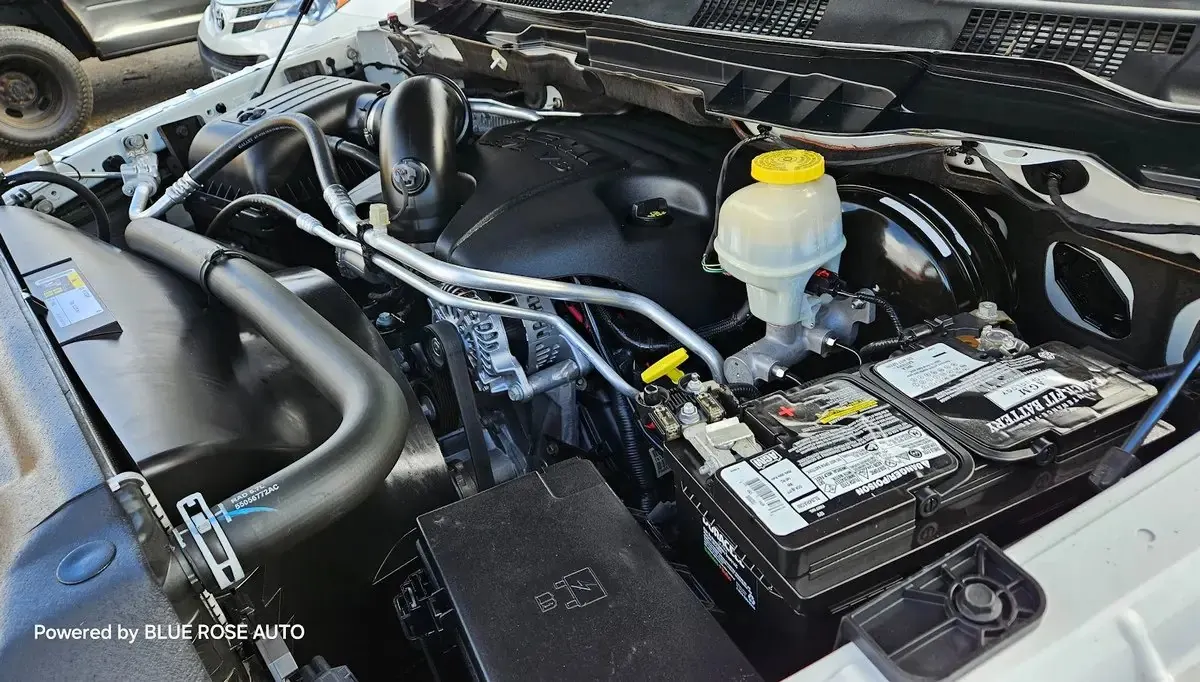
Change your brake fluid at the interval in your owner's manual. Many manufacturers call for it every two to three years no matter how few miles you drive, because the fluid slowly absorbs water from the air. Change it sooner if a moisture test shows high water content, if the fluid has turned dark, or if the pedal goes soft after long downhill braking.
The fluid is easy to forget because the level hardly moves. That is exactly the trap. A full reservoir of old fluid can still boil at a much lower temperature than fresh fluid did.
Why brake fluid goes bad
Most cars use glycol-based fluid, sold as DOT 3, DOT 4 or DOT 5.1. Glycol fluid is hygroscopic: it pulls moisture out of the air, a little at a time, through rubber hoses, seals and the reservoir vent. In the Willamette Valley, where the air stays damp for months, there is plenty of moisture to pull from.
Water in the fluid causes two problems:
- A lower boiling point. Brakes turn speed into heat, and some of that heat soaks into the fluid at the calipers. If the fluid boils, it forms vapor bubbles. Vapor compresses, so the pedal goes soft or sinks right when you need it most.
- Internal corrosion. Water rusts steel lines from the inside and pits caliper pistons and the ABS valves, which are expensive to replace.
The federal standard for brake fluid, FMVSS No. 116, shows how big the gap is. It sets a minimum boiling point for fresh ("dry") fluid and a lower one for fluid that has taken on water ("wet"):
| Grade | Minimum dry boiling point | Minimum wet boiling point |
|---|---|---|
| DOT 3 | 205 °C (401 °F) | 140 °C (284 °F) |
| DOT 4 | 230 °C (446 °F) | 155 °C (311 °F) |
| DOT 5 (silicone) | 260 °C (500 °F) | 180 °C (356 °F) |
The same rule requires every container to warn buyers to keep it clean and tightly closed to prevent the absorption of moisture. That is also why an opened bottle that has sat in the garage for a year is not a good top-up.
Which fluid your car takes
Look at the reservoir cap or the owner's manual. Both usually name the grade.
- DOT 3 and DOT 4 are both glycol-based and are often listed as compatible, though your manual has the final word.
- DOT 5.1 is also glycol-based, with higher boiling points, and is used on some performance and European cars.
- DOT 5 is silicone-based. It does not mix with the others, and it is rarely factory fill on modern cars. Never add it to a system built for glycol fluid.
Many European makers specify their own fluid standard on top of the DOT grade. Use what the manual names.
How to check it at home
You can do a basic check in two minutes with the hood up.
- 1Level. The fluid should sit between MIN and MAX on the translucent reservoir. As pads wear, the caliper pistons move out and the level drops a little. If you top it up and later fit new pads, the reservoir can overflow, so a slightly low level on worn pads is not always a leak.
- 2Color. Fresh fluid is clear to pale amber. Dark fluid has collected moisture, rubber particles and heat damage.
- 3Moisture. Test strips and pen-style testers give a quick reading of water content. A shop's tester is more precise, and boiling-point testers are the most direct of all.
A drop that keeps coming back after a top-up means fluid is leaving the system. Look for wet spots inside the wheels, and read the inspection checklist for the other driveway checks worth doing at the same time.
Flush, bleed or top-off?
These terms get mixed up on invoices, so it helps to know the difference.
- Top-off: adding fluid to the reservoir. It does nothing about the old fluid already in the lines.
- Bleed: pushing fluid through each caliper to remove trapped air, usually after a part is replaced.
- Flush (or exchange): replacing all the old fluid in the lines with new, wheel by wheel. This is what the maintenance schedule means by changing the fluid.
Cars with ABS or electronic stability control sometimes need a scan tool to cycle the ABS valves so old fluid trapped inside the unit gets pushed out. Your service manual will say if yours does. Ask about it when booking, whether at Blue Rose Auto or anywhere else, so the quote covers the full exchange.
Signs the fluid is the problem
Fluid problems tend to show up under heat. Watch for a pedal that feels firm around town but goes soft after a long descent, or brakes that fade on a steep grade and recover once they cool. A spongy pedal from the first press of the day is more often air in the lines. Both are covered in our list of common brake warning signs.
If you have just driven a long grade and the pedal feels wrong, pull over somewhere safe and let the brakes cool before going on.
Getting the fluid changed in Springfield
If your fluid is dark, overdue by the manual, or failing a test strip, a full flush is a small job compared with replacing corroded lines or an ABS unit later. The Springfield auto repair page from Blue Rose Auto covers the brake and mechanical work done at its Olympic Street shop, and it is a good place to book a fluid change alongside other service. Blue Rose Auto has ASE-certified technicians and is open six days a week, Monday through Saturday. For how fluid fits into the rest of brake upkeep, return to the brake care guide home page.