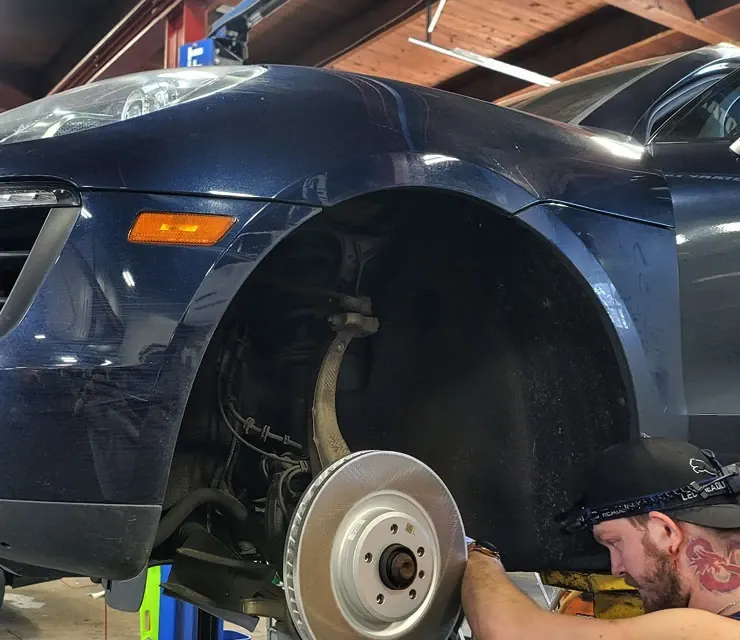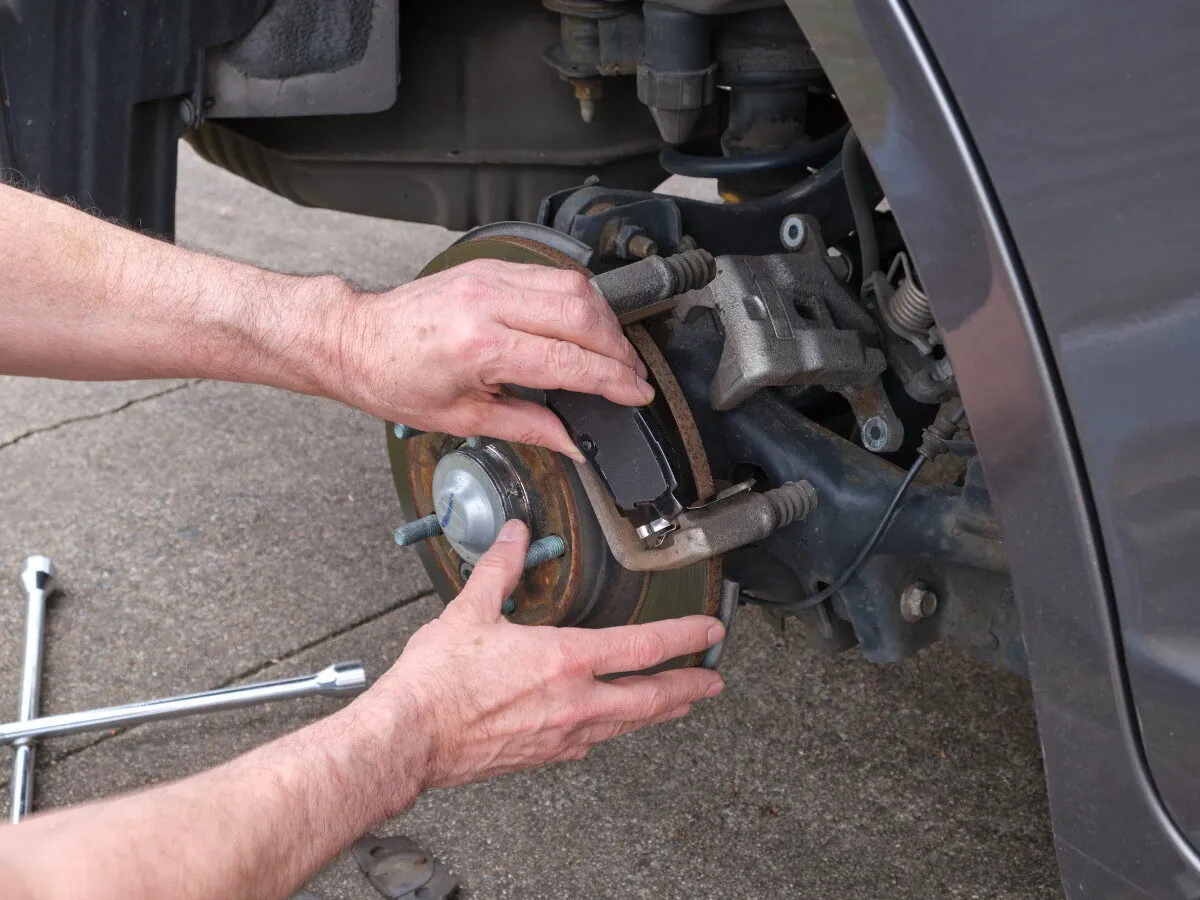
Brake pads are the replaceable friction blocks that clamp onto the rotor; rotors are the metal discs bolted to each wheel hub that the pads squeeze. Pads wear much faster, and many cars go through more than one set before the rotors need attention. Replace pads when they reach the minimum thickness your vehicle maker lists or when the wear tab starts to squeal. Rotors get resurfaced or replaced when they fall below the minimum thickness cast or stamped on them, wear unevenly enough to cause a pulse, or carry deep grooves.
How the two parts wear together
Every stop scrapes a thin layer from both surfaces. The pad is softer by design, so it gives up most of the material. The rotor loses a little too, and it also has to soak up and shed the heat of each stop.
That shared wear is why the two parts are judged together. A fresh pad pressed against a grooved rotor only touches the high spots, so it beds in poorly and may wear fast. A smooth rotor paired with a pad worn to its backing plate gets gouged within days. The relationship works both ways.
Front brakes do most of the stopping on a typical car, because weight shifts forward when you slow down. Fronts usually wear out first, often well ahead of the rears. On many hybrids and electric cars the pattern changes, since regenerative braking handles a lot of the slowing and the friction brakes see less use.
Blue Rose Auto posted a short video, shown on this page, of what worn brake pads look like once the wheel is off; it is a useful reference before you read a quote.
Pad types compared
Most passenger cars use one of three pad families. Your owner's manual or the original part number tells you which one the car was designed around.
| Pad type | Strengths | Trade-offs | Typical fit |
|---|---|---|---|
| Organic (NAO) | quiet, gentle on rotors | wears faster, more fade when hot | lighter, older cars |
| Semi-metallic | strong bite, handles heat | noisier, more dust, harder on rotors | trucks, towing, heavy use |
| Ceramic | quiet, low dust, long life | can cost more, less bite when cold on some cars | many modern cars and SUVs |
Changing pad families is not always a mistake, but it changes the feel and the noise. If your truck tows a trailer up the Willamette Highway, a quiet commuter pad is the wrong pick.
Pad makers have also changed what goes into the friction material. The EPA's Copper-Free Brake Initiative set targets to cut copper in brake pads below 5 percent by weight in 2021 and 0.5 percent by 2025, and it also limits metals such as lead, mercury and cadmium. The program includes marking on pad packaging, so the box tells you more than the brand name.
Resurface or replace the rotors?
Resurfacing (also called machining or turning) shaves a thin layer off both faces on a brake lathe to make them flat and parallel again. It can work well, with one hard limit: the rotor has to stay above its minimum thickness after cutting. That number is usually cast into the rotor hat or edge.
Resurfacing tends to make sense when:
- the rotor has plenty of thickness left,
- the pulsation comes from light, even deposits or mild unevenness,
- the rotor is an expensive part for that vehicle.
Replacement tends to win when:
- the rotor is at or near minimum thickness,
- deep grooves, heat cracks or blue heat spots show up,
- the car has thin, light rotors that can't spare much material,
- new rotors cost about the same as the labor to machine the old ones, which is common on everyday cars.
Shops differ on this, and many now replace rotors as a default because modern rotors are thinner. It is fair to ask for the measured thickness and the minimum, so the choice rests on numbers.
Why "pads only" is sometimes the expensive option
Putting new pads on worn rotors looks cheaper on the day. If the rotors are uneven, the new pads wear to match the old surface, the pedal may still pulse, and you can end up paying for a second visit. Pads alone are a sound choice when the rotors measure well and run true. The guide to brake repair costs breaks down the other factors that move a quote up or down.
Breaking in new pads
New pads and rotors need a bedding-in period that lays down an even film of pad material on the rotor face. Pad makers publish their own procedure, and it usually involves a series of moderate stops from moderate speed without coming to a full halt, then driving to let things cool. For the first few days, avoid hard panic-style stops where you can, and give the brakes a little more room than usual.
If a squeal or pulse shows up shortly after new parts go on, mention it to the shop. The warning signs guide helps you describe what you are hearing.
Pads, rotors and the rest of the front end
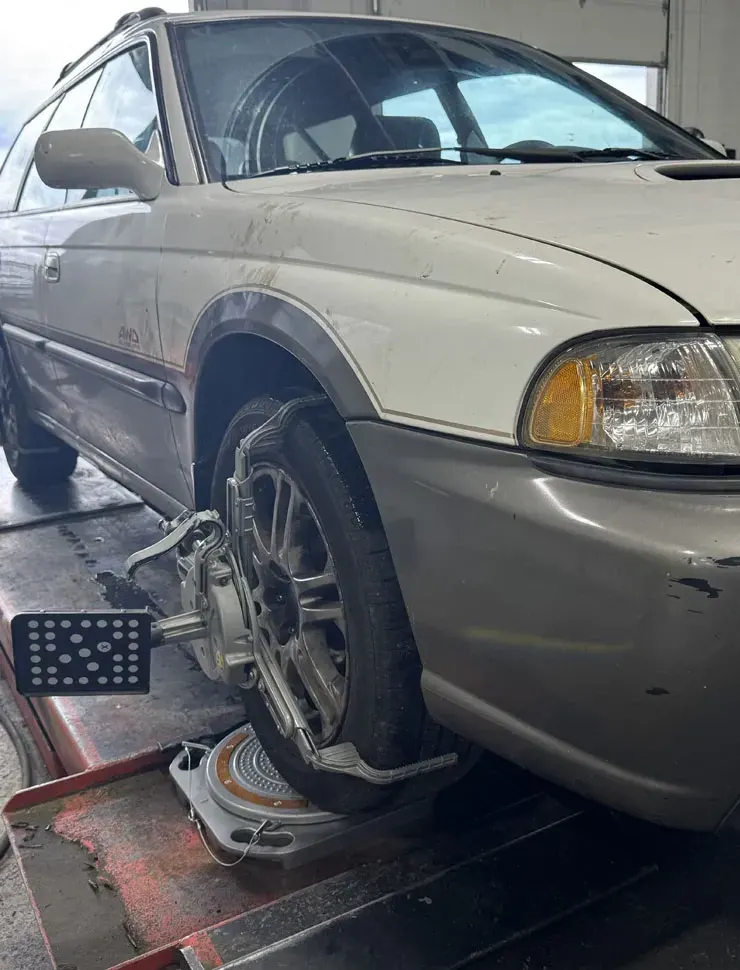
Uneven pad wear from side to side, or a car that pulls, is not always a brake fault. Worn suspension parts, a sticking caliper or alignment that has drifted can all wear one pad faster than its partner. That overlap is why the Blue Rose Auto brake and alignment service page is worth reading if your pads keep wearing unevenly, since it covers both jobs at the Springfield shop. For more on keeping the whole system in shape, go back to the brake care guide overview.